Why Many Luxury Fashion Brands Are Struggling in 2025: A Tale of Two Perspectives

Luxury fashion, long considered the apex of design, beauty, and cultural expression, is facing a quiet but seismic crisis.
While some maisons continue to radiate timeless elegance and integrity, many have begun to falter. Once-infallible brands are now reporting weaker performance, eroding brand loyalty, and increasing skepticism from younger, more discerning customers.
The culprit isn’t just a slowing global economy or shifting generational tastes. The crisis runs deeper: a philosophical and strategic drift from what might be called “true high fashion” to “fake high luxury.”
At its core, this crisis is about how luxury is perceived and practiced—a forked path dividing the industry. On one side lies a vision of luxury rooted in meaning and mastery; on the other, a commodified, surface-level mimicry, hollowed out by profit motives and social posturing.
This shift has consequences—not only for brand equity and financial performance, but for the soul of the fashion industry itself.
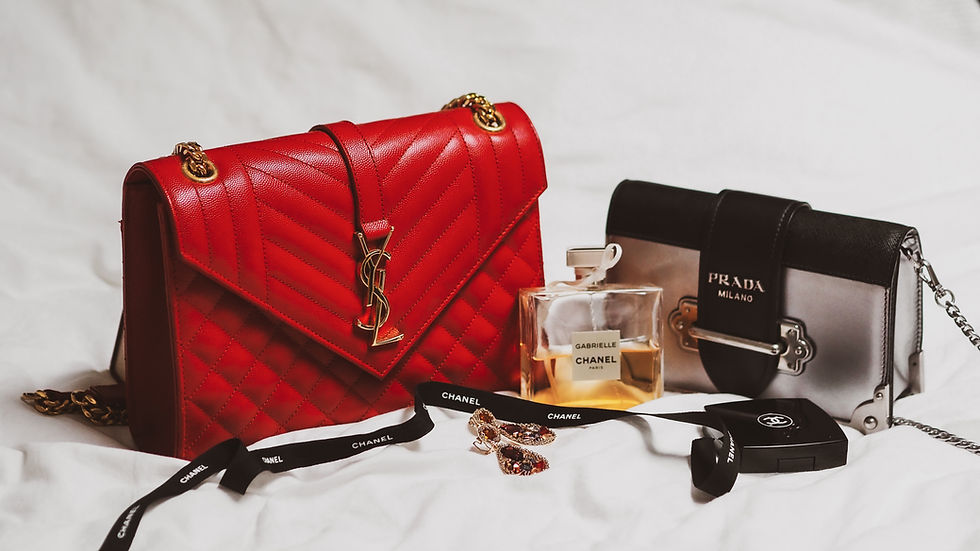
Two Different Perspectives on Luxury Fashion
Luxury is not inherently virtuous or corrupt. It is a neutral form—a canvas. But how it’s approached determines whether it uplifts or alienates, inspires or exploits.
Let’s call these two distinct treatments of luxury what they are:
1. The “Shining” Side of Luxury (High-Frequency Perspective)
This vision treats luxury as functional art. It is an elevated form of design and craftsmanship, rooted in creativity, emotion, beauty, and a reverence for humanity—both in the making and the wearing.
This is the soul of true high fashion. Here, luxury is:
Aesthetically refined
Engineered for longevity and performance
Crafted with skill and soul
Tasteful, original, and meaningful
This form of luxury celebrates subtle excellence, not loud status.
Think Gabrielle Chanel’s radical elegance, Yves Saint Laurent’s boundary-breaking tailoring, or the modern finesse of The Row. This is a soulful, high-performance approach to beauty—a joy not just to wear, but to live with.
2. The “Shadow” Side of Luxury (Low-Frequency Perspective)
This vision treats luxury as a symbol of superiority. It’s not about beauty or function—it’s about exclusivity, price, and spectacle.
In this version, quality and creativity become secondary—replaced by high markups, aggressive branding, and artificial scarcity. Luxury becomes:
Wasteful and performative
Emotionally hollow
Overpriced without added value
Obsessed with image over substance
This is "fake high luxury"—where products exist not as meaningful creations but as tools of social distinction. They signal status through price, not refinement. Logos replace design. Visibility replaces craftsmanship.
Here, luxury is disconnected from real value and sustained by illusion, not innovation.
How Luxury Fashion Brands Lost Their Souls
As luxury fashion brands became public companies or were absorbed into conglomerates like LVMH, Kering, and Richemont, the mission shifted from cultural influence to financial growth.
Profit-driven decisions led many fashion houses to sacrifice their creative roots for scalable hype and market saturation.
In essence, many of them have shifted to the "Shadow" side of luxury.
A) Public Ownership and Investor Pressure
Once family-run ateliers are now part of corporate portfolios. The demand for aggressive year-over-year growth encourages shortcuts, trend-chasing, and branding excess—at the cost of integrity.
This alienates core customers who once viewed fashion as a personal and emotional relationship. Now, many feel abandoned by brands chasing virality over refinement.
B) Hype and Logo Dependency
To drive volume and visibility, many brands leaned into monograms, celebrity partnerships, and viral campaigns. What was once a detail of identity became the entire identity.
An overreliance on logos and influencer culture eroded the artistic soul of many houses. Drop models replaced seasonal storytelling. Substance gave way to spectacle.
C) Compromised Quality over Scalability
As demand soared, many brands outsourced production to less-regulated factories in low-cost countries. Higher margins came at the expense of quality, detail, and the brand promise.
Today, many “luxury” items are produced alongside mid-tier products—but sold at 10x the price, justified not by craftsmanship but by label alone.
D) Price Inflation without Value Add
Prices skyrocketed—often 20–30% annually—without any tangible improvements in materials or construction. For instance, Chanel’s classic flap bag rose from ~$5,000 in 2019 to over $10,000 in 2024, with few meaningful upgrades.
Consumers began noticing the disconnect.
E) Loss of Identity and Meaning
Heritage brands are now designed by committee instead of by vision. Marketing teams override creative direction. The result: diluted voice, inconsistent aesthetic, and alienated long-term clients.
The Luxury Consumer’s Awakening
Today’s luxury fashion consumer is evolving. Millennials and Gen Z—who now drive over 50% of luxury sales—are more thoughtful than they’re often credited for. They value:
Authenticity over flash
Subtlety over spectacle
Sustainability and ethics
Quality over status
Connection over performance
Value-per-wear over trendiness
They can feel when a product has soul—and when it was made for show.
This new generation of buyers is rejecting overt status symbols and gravitating toward brands that still honor the “shining” side of luxury: Loewe under Jonathan Anderson, The Row, Bottega Veneta, Maison Margiela, and niche ateliers that prioritize beauty over billboards.
The Data Is Catching Up
The financial performance is reflecting this trend:
According to Bain & Company’s 2024 luxury report, global personal luxury goods sales grew only 2%, a steep drop from the 7–10% average growth of the last decade.
Kering Group reported a 17% decline in Q1 2025, citing “brand repositioning challenges.” In reality, they suffer from a loss of brand identity.
Chanel’s growth slowed to 3% in 2024, down from double-digit annual gains.
Hermès, in contrast, saw a 16% increase—proof that craftsmanship and consistency still resonate.
Brunello Cucinelli, embracing “humanistic capitalism,” posted record profits in 2024.
Loro Piana, known for ultra-premium fabrics and quiet design, is growing 15–20% annually.
Consumers are not rejecting luxury—they’re rejecting the fake version of it.
The Way Forward: The Rise of Meaningful Luxury Fashion
Returning to the Soul of High Fashion
Luxury Fashion, at its best, is not about power or price—it’s about beauty, precision, and the elevation of everyday life.
It is art you can wear. It is design you can live in. It is a craft that honors both maker and wearer.
But when luxury becomes hollow—when profit trumps passion—it loses its magic. And consumers, especially discerning ones, can feel that loss.
The brands that will endure are those that resist the pull of fake high luxury and return to their soul. Those who view fashion not merely as commerce, but as culture, connection, and craft.
The Challenge for the Luxury Industry
Luxury fashion is at a turning point.
Those who cling to hype, logos, and spectacle may enjoy short-term profits—but they risk long-term irrelevance. Because luxury without beauty, quality, and emotional connection is just expensive marketing.
The future belongs to those who embrace meaningful luxury—where creativity, humanity, and design are central. Where exclusivity comes not from price, but from real differentiation.
In the end, the most powerful form of luxury isn’t the kind that says, “I’m better than you.”
It’s the kind that whispers:
“This is beautiful. This matters. This will last.”


Step into the Dutton legacy with Yellowstone Dutton Ranch Apparel made for fans who value authenticity. Complement your style with rugged Yellowstone Dutton Ranch Merch, designed to reflect the ranch spirit and Western lifestyle. Experience excellence in every stitch at Western Apparel.